Beginners · acrylic-yarn
5 Best Yarns for Crochet Teddy Bears (Compared)
Choosing the right yarn makes or breaks your amigurumi bear. Compare cotton blends, mercerized cotton, acrylic, chenille, and bouclé for durability and softness.
 The PetsYarn studio
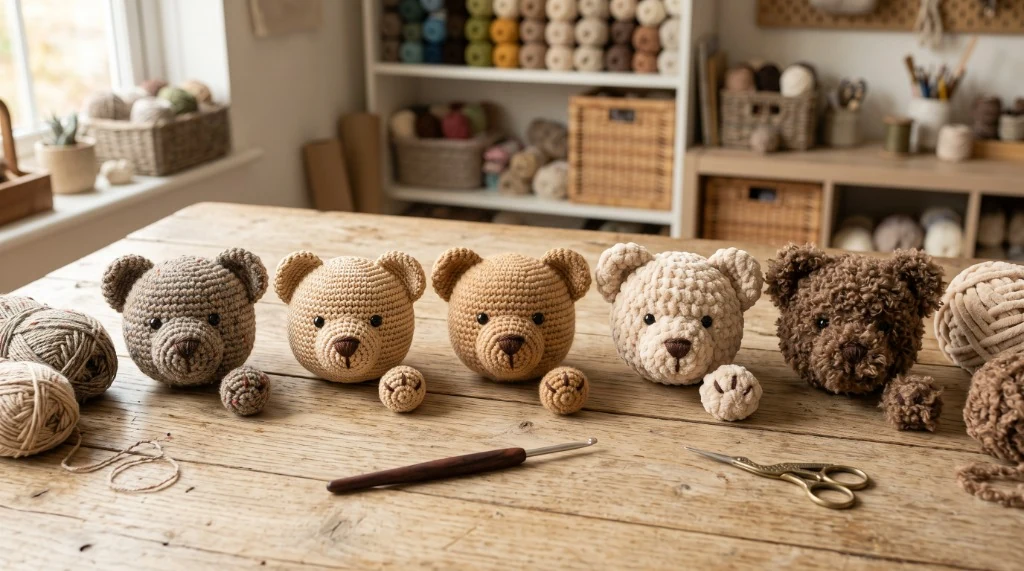
Choosing the right yarn for a crochet teddy bear is not just about picking a pretty shade of caramel or honey brown. A teddy bear has very different mechanical demands than a wearable beanie or a baby blanket. It requires dense stitch definition to sculpt expressive cheeks and eye sockets, high tensile strength so jointing threads do not tear through the limbs, and low-stretch fiber architecture so heavy polyfill stuffing doesn’t distort the shape over time. Here are the 5 best yarns for crochet teddy bears, tested and compared for durability, hand-feel, and heirloom longevity.
In This Yarn Buyer’s Guide:
- 1. Cotton/Acrylic Blend (The Heirloom Gold Standard)
- 2. 100% Mercerized Cotton (Pin-Sharp Stitch Definition)
- 3. Premium Anti-Pilling Acrylic (Cozy & Budget-Friendly)
- 4. Chunky Chenille & Velvet (The Modern Squishy Cloud)
- 5. Bouclé & Brushed Wool (The Antique Steiff Fur Look)
- Yarn Performance Comparison Matrix
- The Final Verdict: Which Yarn for Your Bear?
1. Cotton/Acrylic Blend (The Heirloom Gold Standard)
If you want to create an articulated, poseable teddy bear that looks like a vintage European collector’s piece, a cotton/acrylic blend (50/50 to 55/45 ratio) in Sport (Weight 2) or DK (Weight 3) is unbeatable. Popular examples include Scheepjes Stone Washed, YarnArt Jeans, and Alize Cotton Gold.
- Why It Excels: The cotton core provides structural firmness that refuses to stretch or sag under dense polyfill, while the brushed acrylic exterior gives a warm, gentle halo that mimics vintage mohair.
- Jointing Strength: High friction resistance. When you cinch internal button joints, the yarn fibers lock together without fraying or cutting.
- Ideal For: Moveable-joint teddy bears, detailed snout embroidery, and heirloom keepsake toys.

2. 100% Mercerized Cotton (Pin-Sharp Stitch Definition)
Mercerized cotton (such as Schachenmayr Catania, Hobbii Rainbow 8/4, or Paintbox Cotton DK) undergoes a chemical bath that smooths away all outer fuzz and flattens the fiber plies under tension. This gives the yarn a brilliant silky luster and unmatched structural rigidity.
- Why It Excels: It produces the crispest, sharpest single crochet stitches of any yarn on the market. If you love photographing your finished work for Instagram or Etsy, every stitch will look like a perfect little pixel.
- Zero Fuzz & Hypoallergenic: Safe for newborns and toddlers who put toys in their mouths, as there are no loose fibers to inhale or swallow.
- The Trade-Off: It has zero elasticity, which means prolonged crocheting can cause hand fatigue if you hold high tension. It also feels firmer and less “cuddly” than wool blends.
3. Premium Anti-Pilling Acrylic (Cozy & Budget-Friendly)
Forget the scratchy, squeaky economy acrylic of twenty years ago. Modern anti-pilling micro-acrylics (such as Stylecraft Special DK, Premier Yarns Anti-Pilling Everyday, and Lion Brand Basic Stitch) are spun from engineered fibers that resist surface rubbing.
- Why It Excels: Incredible color range (often 60–100 shades per brand), extremely budget-friendly, and lightweight. When stuffed, acrylic bears feel delightfully squishy and huggable.
- 100% Machine Washable: Withstands repeated machine washing and tumbling on cool settings without shrinking or hardening.
- Watch Out For: Standard acrylic has slight stretch, so always downsize your crochet hook by 1.0 mm to prevent polyfill from showing through the stitches.
4. Chunky Chenille & Velvet (The Modern Squishy Cloud)
Chunky chenille and blanket yarns (such as Hobbii Baby Snuggle, Premier Parfait Chunky, and Bernat Baby Blanket) have exploded in popularity across social media. They transform a 6-inch palm-sized pattern into a gigantic 14-inch huggable plush bear in just a single afternoon.
- Why Makers Love It: Instant gratification. Stitches work up lightning fast with a 5.0 mm to 6.5 mm hook, resulting in an irresistibly soft, velvet-like texture.
- Major Limitations for Heirloom Bears:
- Weak Core: Chenille consists of short tufts glued onto a thin central thread. Hard friction from moveable button joints can strip the fuzz off the core (called “worming” or shedding).
- Zero Stitch Visibility: Impossible to see stitch loops, making row counting and precise facial needle sculpting challenging for beginners.

5. Bouclé & Brushed Wool (The Antique Steiff Fur Look)
If your dream is to replicate the authentic look of a 1920s German Steiff collector’s bear, look into bouclé yarns (curled loop plies) or brushed alpaca/mohair blends worked alongside a thin cotton carrier thread.
- Why It Excels: The looped texture completely hides individual crochet rounds, making the finished bear look like it was hand-sewn from luxury plush fur fabric rather than crocheted.
- Brushing Trick: After crocheting, run a wire pet slicker brush gently across the surface to tease the fibers into an ultra-fluffy fur coat.
- Skill Level: Advanced. Frogging (unraveling) mistakes with bouclé or mohair is nearly impossible because the fibers catch on each other.

Yarn Performance Comparison Matrix
The Final Verdict: Which Yarn for Your Bear?
If you are making our Small Heirloom Teddy Bear with moveable limbs and needle-sculpted eye sockets, we strongly recommend a Cotton/Acrylic blend (like Scheepjes Stone Washed or YarnArt Jeans) paired with a 2.5 mm hook. It gives you the perfect sweet spot: durable enough to hold button joint tension without stretching, crisp enough to highlight facial sculpting, yet velvety soft in your hands.
Crochet Your Heirloom Bear Today
Put your favorite yarn to work with our Free Crochet Teddy Bear Pattern! Includes full counts for head, body, arms, and legs. For high-res collector’s photo charts, pick up the 15-page printable PDF on Etsy for only $3.50.
We write tested crochet patterns for cats and dogs, and share everything we learn along the way. About us