Dogs · amigurumi dog
5 Simple Steps to Crochet Your First Dog: An Amigurumi Beginner Roadmap
Wondering how to crochet a dog for beginners? This step-by-step amigurumi guide breaks down yarn selection, seamless magic ring spiral tension, invisible decreases, and foolproof snout shaping so you can craft your first puppy plush with confidence.
 The PetsYarn studio
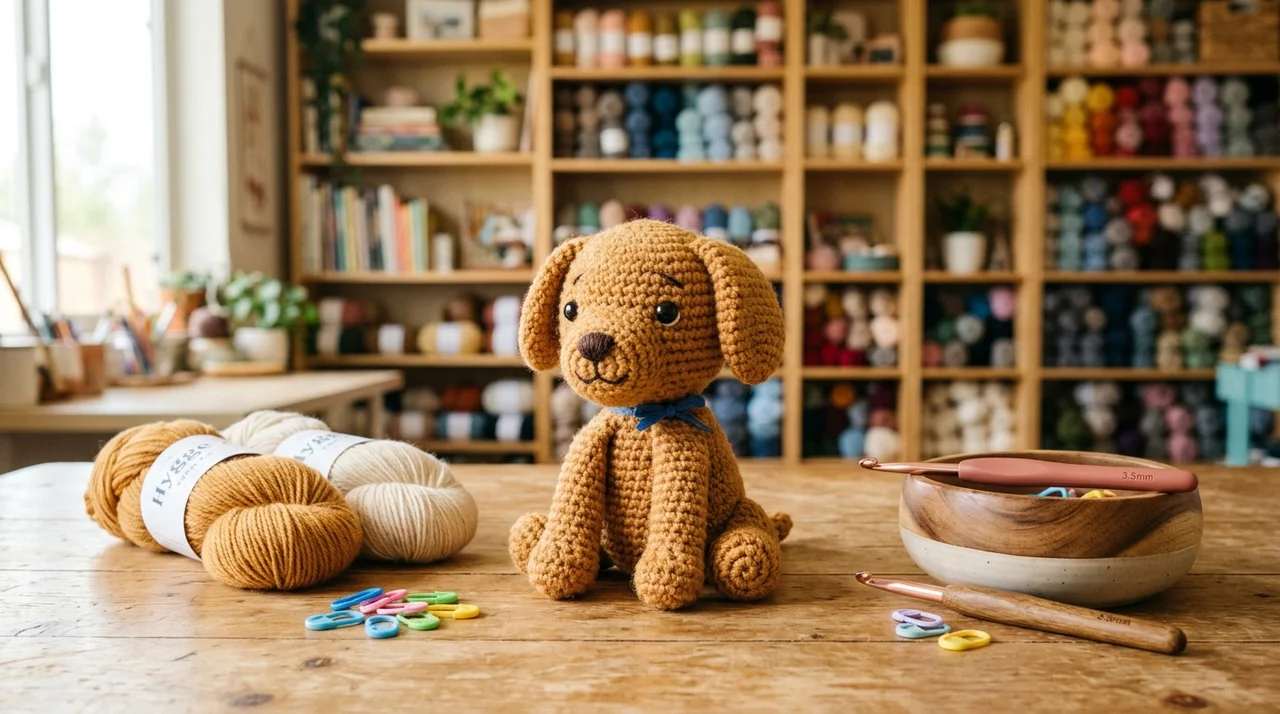
Crocheting your very first pet amigurumi is one of the most rewarding milestones in the craft. While miniature four-legged figures look intricate, breaking down how to crochet a dog for beginners into five manageable steps makes the entire journey enjoyable, predictable, and remarkably fast. Whether you are looking for free easy amigurumi crochet patterns or crafting a keepsake puppy, this visual roadmap guides you from yarn selection to final snout embroidery without frustrating guesswork.
In This Beginner Dog Crochet Roadmap:
- Step 1: Choosing the Ideal Beginner Yarn & Hook Size (Avoiding the “Fuzz Trap”)
- Step 2: The Magic Ring & Continuous Spiral Rounds (Eliminating Seam Lines)
- Step 3: Mastering the Invisible Decrease (invdec) for Smooth Curves
- Step 4: Safety Eye Placement, Snout Alignment & Pinning
- Step 5: Cloud Stuffing Techniques & Floppy Ear Attachment
- Frequently asked questions
Step 1: Choosing the Ideal Beginner Yarn & Hook Size (Avoiding the “Fuzz Trap”)
When searching for a simple dog crochet pattern free tutorial, many makers are tempted to grab ultra-chunky chenille velvet or fuzzy novelty yarns right away. While fluffy yarns produce cuddly results, they obscure individual stitch V-loops—making counted rounds difficult to track for first-time crocheters.
For your first dog project, choose a smooth, plied yarn that provides sharp stitch definition:
- Recommended Fiber: Category #4 Medium Worsted 100% Cotton or smooth mercerized cotton-acrylic blend (such as Paintbox Yarns Cotton Aran or Lion Brand 24/7 Cotton). Smooth fibers allow you to clearly identify the front and back loops of each stitch.
- Downsize Your Hook: Standard yarn labels usually suggest a 5.0 mm (US H/8) hook for worsted weight. For amigurumi dog plushies, always downsize to a 3.25 mm (D) or 3.5 mm (E) hook. This tighter gauge prevents polyester stuffing from poking out between stitches.
- Contrasting Colorway: Start with warm neutral tones like oatmeal, caramel, or honey gold. Dark navy or jet-black yarns absorb shadows, making decreases and spiral rounds significantly harder to inspect.
Step 2: The Magic Ring & Continuous Spiral Rounds (Eliminating Seam Lines)
Amigurumi dog heads and bodies are worked in continuous spirals rather than joined rounds. Joining with a slip stitch and chaining up creates a visible diagonal seam running down your puppy’s forehead or back. Working in a spiral keeps the fabric completely smooth and uniform.
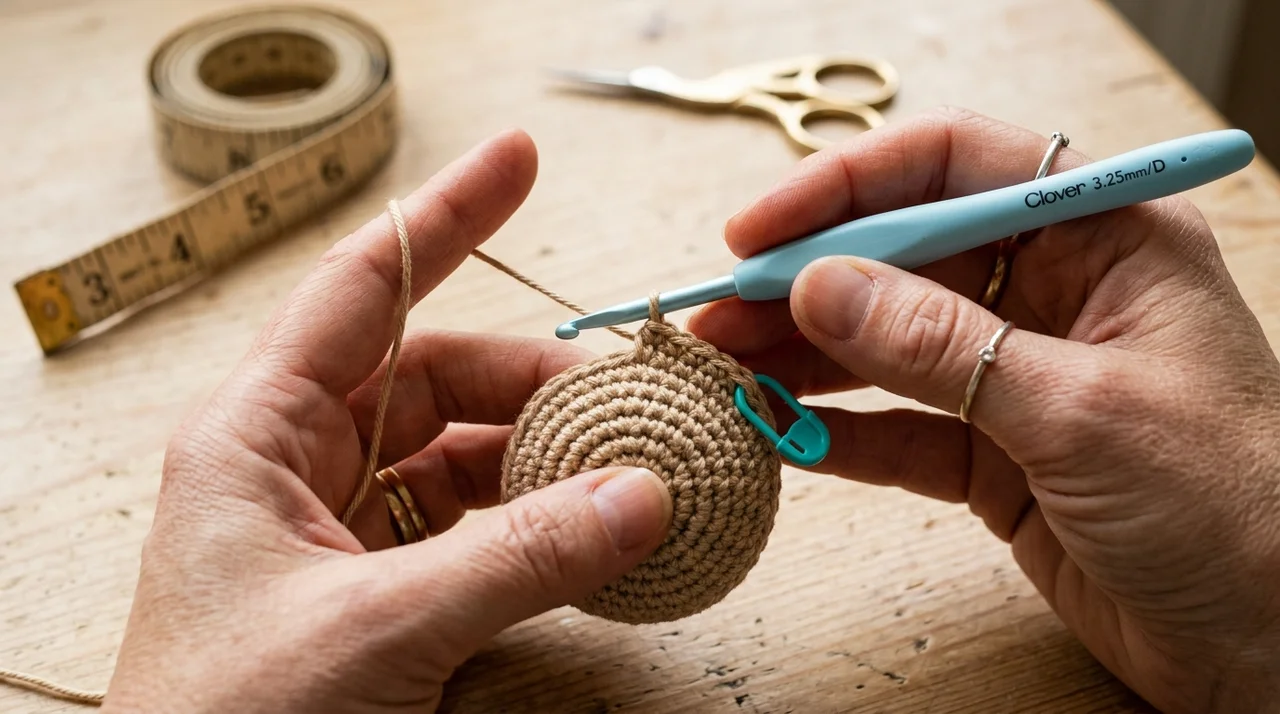
Here is the universal foundation formula for a symmetrical spherical dog head:
- Round 1 (Foundation): Make a Magic Ring (MR) and work 6 single crochets (sc) into the adjustable loop. Pull the tail firmly to close the center hole with zero aperture (6 stitches).
- Round 2 (Doubling): Work 2 sc into every stitch around (12 stitches).
- Round 3 (Stepped Increases): *1 sc in next st, 1 inc in following st* repeat 6 times (18 stitches).
- Round 4 (Expansion): *2 sc, 1 inc* repeat 6 times (24 stitches).
- Rounds 5–10 (Work Even): 1 sc in each stitch around to build cranial depth without flaring.
Pro Maker Tip: Always place a locking plastic stitch marker into the first stitch of each round. Move it up on every cycle. Because continuous spirals lack end-of-round chains, miscounting by even a single stitch can skew ear and snout alignment later.
Step 3: Mastering the Invisible Decrease (invdec) for Smooth Curves
Standard decreases (sc2tog) pull two stitches together by working under both loops of adjacent stitches. This creates a bulky knot and a visible gap. When learning how to crochet a dog for beginners, the invisible decrease (invdec) is the single most transformative technique you can learn.
To execute a flawless invisible decrease:
- Insert your hook through the front loop only (FLO) of the first stitch from underneath.
- Without wrapping the yarn, immediately swing your hook tip under the front loop only of the second adjacent stitch (you now have 3 loops on your hook: working loop + 2 front loops).
- Yarn over and pull through the first two front loops.
- Yarn over once more and pull through the remaining two loops on your hook.
Because the back loops remain undisturbed on the inside of the work, the outside surface looks identical to standard single crochets, yielding seamless chin lines and tapered puppy paws.
Step 4: Safety Eye Placement, Snout Alignment & Pinning
The personality of an amigurumi canine lives entirely in facial placement. Placing eyes even one round too high or too far apart transforms a playful puppy into an startled adult dog.
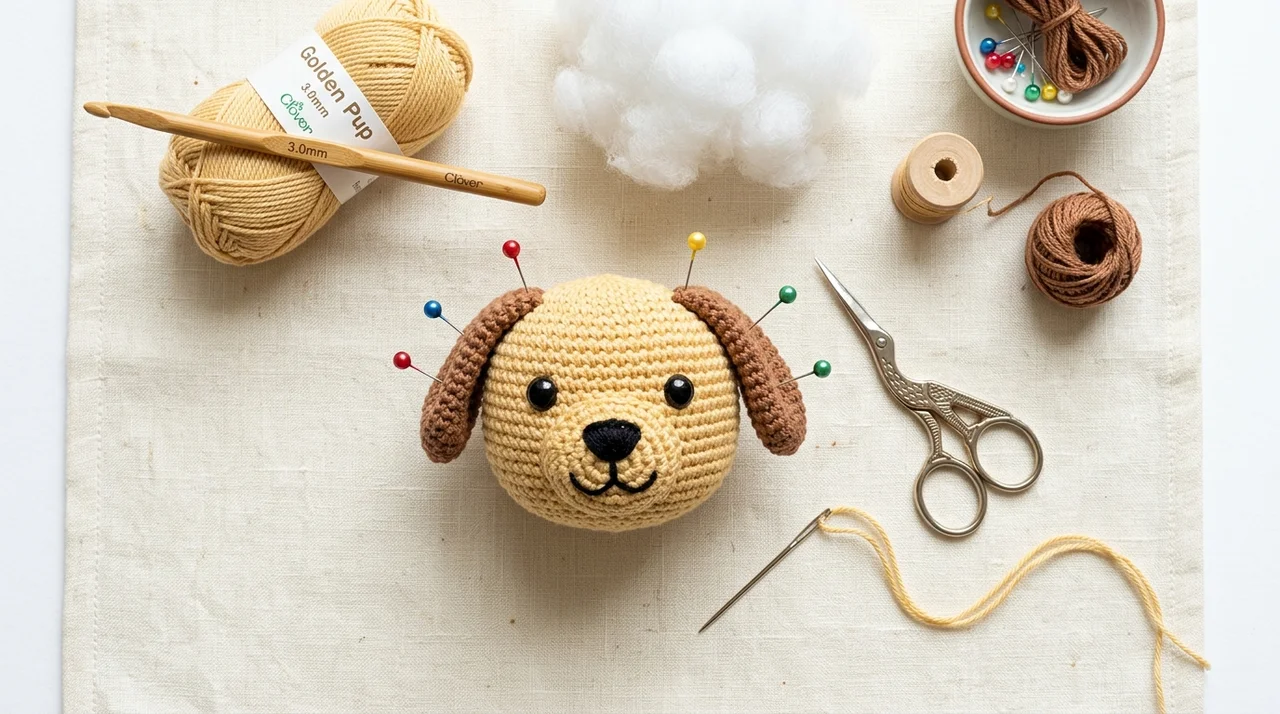
- Eye Level Rule: Insert 9 mm or 10 mm black safety eyes between Rounds 8 and 9, spaced approximately 6 to 7 visible stitches apart. Always snap the rear washer onto the grooved post before closing or stuffing the cranial opening.
- Sculpted Snout: Crochet the snout as a separate small oval (working around both sides of a 4-chain foundation). Pin the snout directly between the eyes, overlapping Rounds 7 through 11.
- Embroidered Nose: Using a blunt tapestry needle and dark brown or black yarn, embroider a satin-stitch inverted triangle across 3 horizontal passes, followed by a straight vertical line downward to form the puppy philtrum.
Step 5: Cloud Stuffing Techniques & Floppy Ear Attachment
Under-stuffing causes amigurumi limbs to deflate over time, while aggressive over-stuffing stretches your stitches open and exposes white batting. Follow the “cloud cluster” rule:
- Tear off small, golf-ball-sized clumps of high-resilience polyester fiberfill rather than cramming large wads inside.
- Use the blunt wooden end of a crochet hook to guide stuffing against the interior walls first, filling the canine muzzle and cheek bulges before filling the center core.
- Ear Alignment: Pin floppy teardrop ears symmetrically on either side of the crown, angled slightly backward along Round 4. Whipstitch through both the fold of the ear and the surface loops of the head, securing knots invisibly beneath the neck seam.
Once you complete these foundational steps, you can explore larger shaped designs like our free Husky Dog Crochet Pillow Pattern and French Bulldog Pillow Guide, or check our Dog Sizing Measurement Guide to crochet custom pet sweaters!
Frequently asked questions
What is the easiest dog breed to crochet for beginners?
Single-color floppy-eared breeds like Golden Retrievers, Labradors, and Beagles are the easiest for beginners because they do not require complex mid-row intarsia color changes. Breeds with standing ears or distinct facial masks (such as Huskies and French Bulldogs) require intermediate color-swapping techniques.
Why do my crochet stitches have holes where stuffing shows?
Stuffing gaps happen when the crochet hook is too large for the yarn weight, or when tension relaxes mid-round. Always use a hook 1.0 mm to 1.5 mm smaller than the yarn band recommends, and pull the working loop snug against the hook shank after each yarn-over.
Can I use safety eyes if gifting to young children or pets?
For baby toys or active pet chew items, do not use plastic safety eyes, as washers can loosen under biting pressure. Instead, embroider safe, flat French knot eyes or satin-stitched sleeping lashes using dark mercerized cotton yarn.
We write tested crochet patterns for cats and dogs, and share everything we learn along the way. About us