Sizing · crochet dog clothes
How to Measure Your Dog for Crochet Sweaters and Clothes (With Size Chart)
Most ill-fitting crochet dog sweaters fail at the tape measure, not the hook. Learn how to take accurate chest, neck, and length measurements for handmade pet clothes, calculate positive ease, and use our canine breed size chart to ensure a comfortable fit every time.
 The PetsYarn studio

Most ill-fitting dog sweaters fail at the tape measure, not the hook. Taking three quick, calm measurements before picking up your yarn is the secret to handmade pet clothes that stay in place, never rub under the front legs, and keep your pup comfortable all winter.
According to canine wellness recommendations from the American Kennel Club (AKC), smaller breeds, dogs with thin single coats, and senior pets lose body heat quickly and benefit greatly from a warm, protective outer layer in cool weather.
If you’re starting out with crochet dog clothes or looking for a crochet dog sweater for beginners, one of the greatest joys of making handmade garments is custom fit. Unlike store-bought dog apparel that is either too tight in the chest or dragging on the floor, crocheting your own allows you to tailor every single row to your pet’s exact proportions.
What you need before you start measuring
- A soft tailoring tape measure: If you don’t have one, use a piece of cotton yarn or string and measure it flat against a ruler.
- High-value treats: A spoonful of peanut butter or tiny training treats keeps your dog happily distracted.
- A notebook or phone: Write down your measurements immediately in both inches and centimeters.
Pro Tip: Always measure while standing. If your dog sits, slouches, or lies down, their spine curves and the ribcage compresses, throwing off your back length and girth measurements by up to 3 inches (7 cm).
The 3 essential measurements (step-by-step)
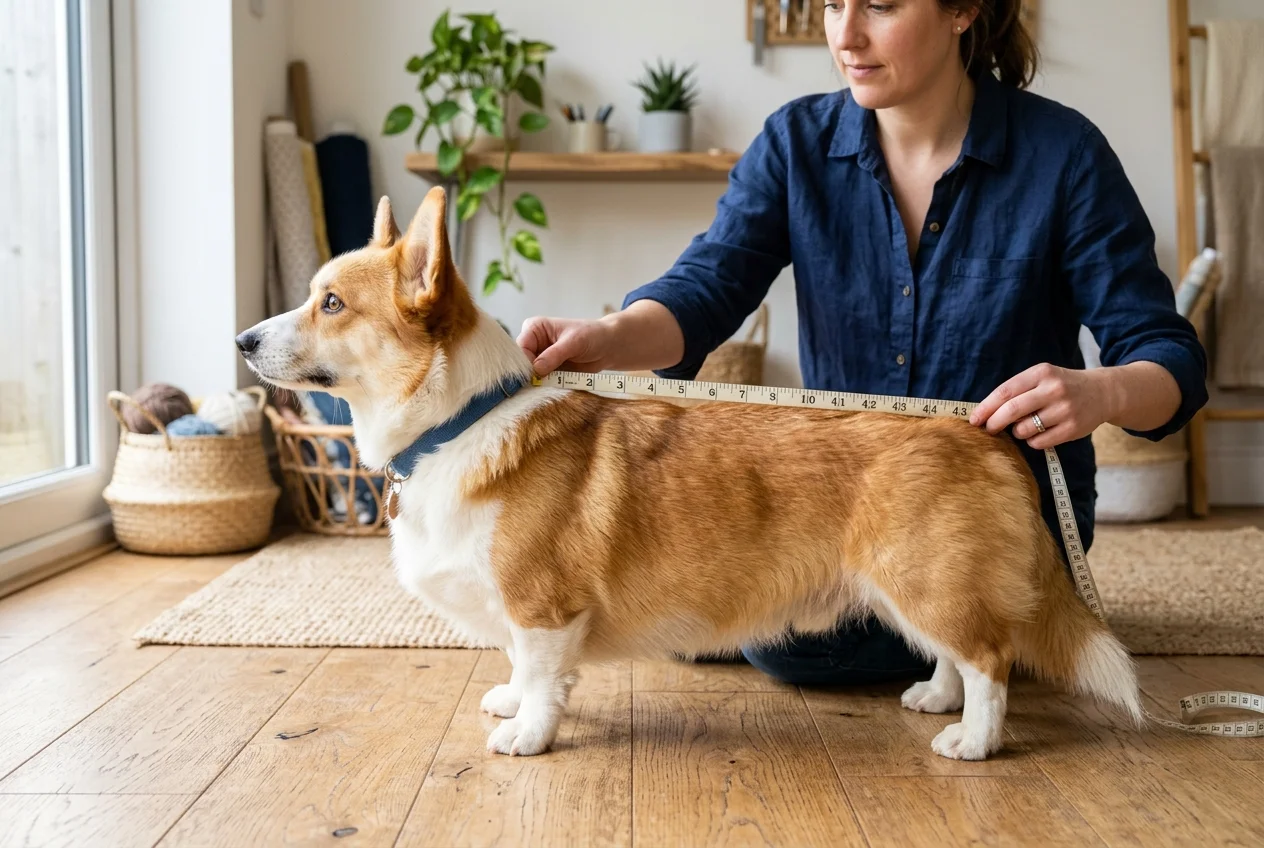
1. Chest Girth (The “Make-or-Break” Measurement)
Chest girth is the single most critical measurement for any crochet pet garment. It determines the primary size bracket you choose in any sweater or coat pattern.
- Stand your dog squarely on all four paws.
- Locate the widest point of the ribcage, right behind the front armpits.
- Wrap the tape comfortably around the torso. It should be flush against the fur, but loose enough that you can easily slip two fingers flat underneath the tape.
2. Back Length (Collar to Tail Base)
Back length dictates how far down the spine the body of the sweater will extend.
- Measure along the spine from the base of the neck (where a relaxed collar naturally rests) down to the base of the tail.
- Important adjustment for boy dogs: For male dogs, sweaters should end approximately 2 to 3 inches (5–7 cm) before the penis underneath to avoid soiling during potty breaks.
3. Neck Circumference
Measure around the lowest part of the neck where the collar sits. Most pet crochet designs feature ribbed turtleneck collars worked in front-and-back post stitches that stretch generously, but knowing the base neck width prevents accidental choking or slipping off the shoulders.
Standard canine crochet size chart
Compare your dog’s measurements with the standard sizing reference below. If your dog falls between sizes, always size up for chest girth.
| Size | Chest Girth | Back Length | Neck | Example Breeds |
|---|---|---|---|---|
| XS | 11–14 in (28–35 cm) | 8–10 in (20–25 cm) | 8–10 in (20–25 cm) | Chihuahua, Yorkshire Terrier, Teacup Breeds |
| S | 14–18 in (36–45 cm) | 11–13 in (28–33 cm) | 10–12 in (25–30 cm) | Jack Russell, Miniature Pinscher, Maltese |
| M | 18–22 in (46–56 cm) | 14–17 in (35–43 cm) | 12–15 in (30–38 cm) | French Bulldog, Pug, Boston Terrier, Beagle |
| L | 22–27 in (56–68 cm) | 18–21 in (46–53 cm) | 15–18 in (38–46 cm) | Cocker Spaniel, Whippet, Standard Schnauzer |
| XL | 27–33 in (68–84 cm) | 22–26 in (56–66 cm) | 18–22 in (46–56 cm) | Golden Retriever, Boxer, Australian Shepherd |
Understanding ease: why yarn choice changes the fit
In crochet garment making, ease refers to the difference between your pet’s actual body measurements and the finished dimensions of the sweater. Standardized craft weights from the Craft Yarn Council also impact how much natural give the fabric has:
- Positive Ease (+1 to +2 inches / 2.5–5 cm): The sweater is made slightly larger than the dog’s chest. This is recommended for stiffer yarns like 100% cotton, non-stretch stitches (like single crochet), or fluffy, long-haired breeds.
- Zero to Negative Ease: The sweater is made slightly smaller than the dog, relying on yarn stretch to hug the body. This is ideal when working ribbed designs or using elastic wool blends.
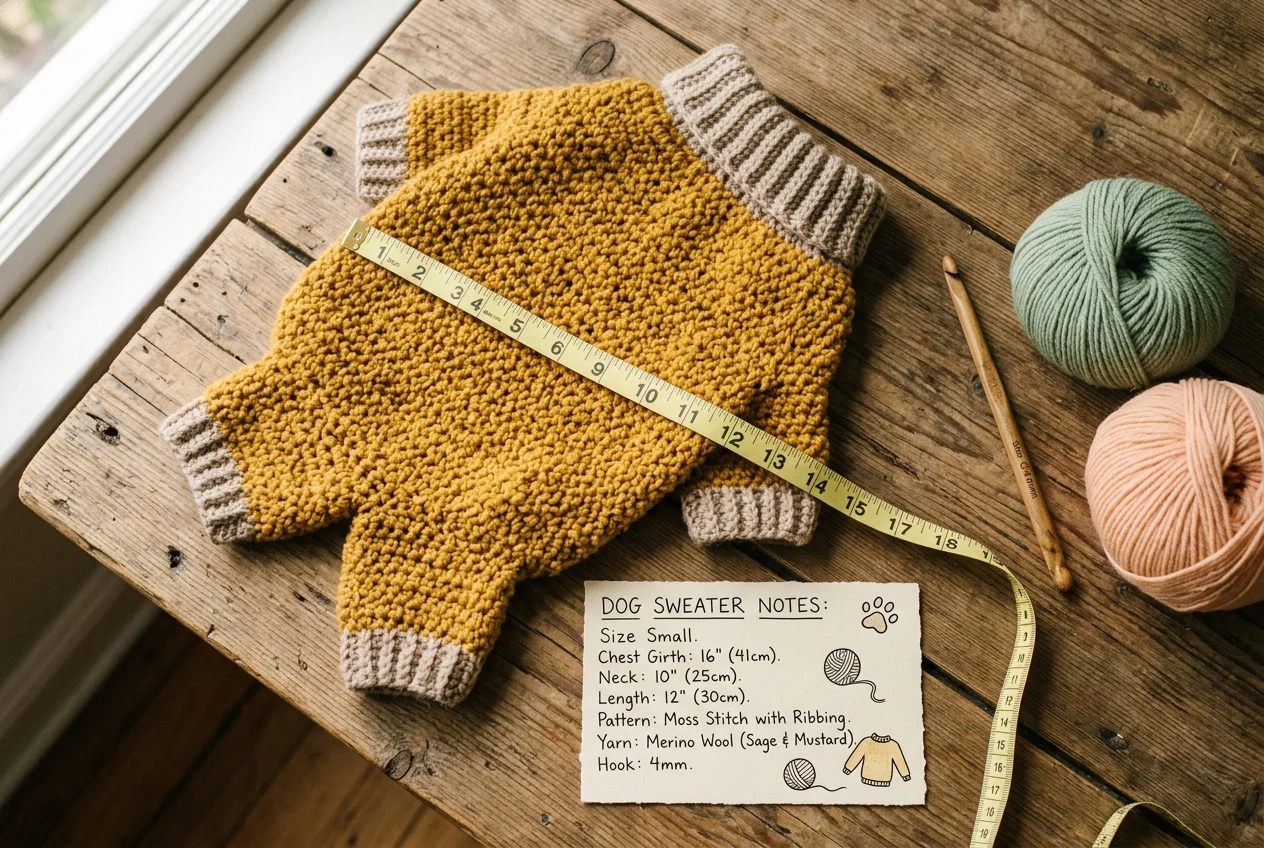
Check your gauge swatch first! Even a beginner pattern will turn out 2 sizes too large or small if your hook tension doesn’t match the pattern gauge. Spend 15 minutes crocheting a 4×4 inch swatch before starting the body.
Special tips for unique body types
Every dog is an individual. Here is how to handle breeds that don’t fit standard size charts:
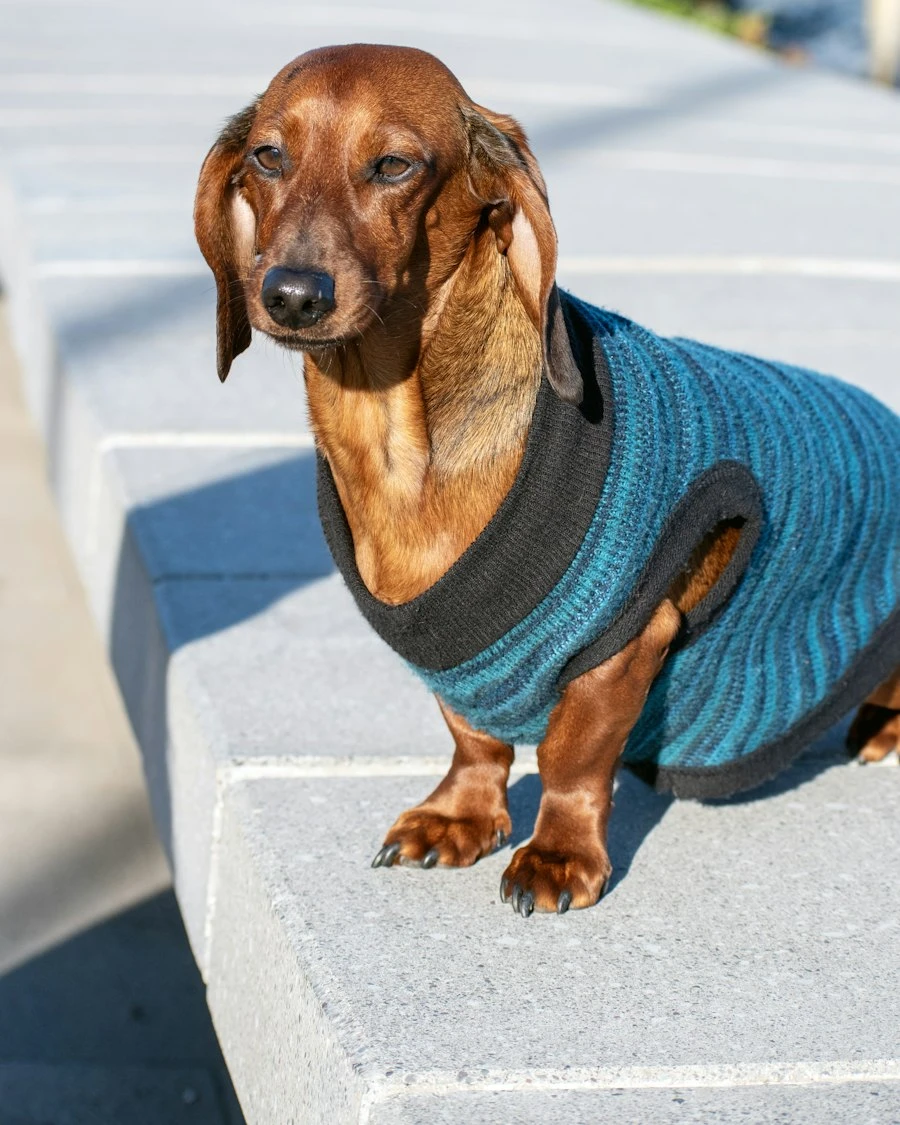
- Long-bodied breeds (Dachshunds, Corgis, Bassets): Pick the size corresponding to their chest girth, and simply add extra repeating body rows between the leg openings and the bottom ribbing.
- Deep-chested, narrow-waisted dogs (Whippets, Greyhounds): Use rapid decrease rows along the underbelly ribbing to cinch the waist and prevent chilly drafts.
- Broad-shouldered dogs (Bulldogs, Pitbulls): Space the leg openings 1 to 2 inches further apart across the chest so the fabric does not pinch behind the elbows.
Ready to start crocheting?
Explore our full library of beginner-friendly pet crochet patterns, with step-by-step instructions, tested sizing, and printable PDF guides.
Frequently asked questions
My dog is between two sizes on the chart. Which should I pick?
Always choose the larger size for the chest girth. In crochet, it is very simple to shorten the body length by working fewer rows, but a sweater that is too tight in the chest will restrict your dog’s breathing and movement.
How do I account for a dog with thick or double fur?
Measure gently over their coat as it naturally rests without pulling the tape tight enough to crush the fur down. Add an extra 0.5 to 1 inch (1.5–2.5 cm) of ease so the sweater slides smoothly over their coat.
My puppy is still growing. How should I size their sweater?
Choose very stretchy stitch patterns (such as ribbed half-double crochet worked in back loops only) and add 2 inches of positive ease. This gives the sweater enough stretch to last through rapid growth spurts.
We write tested crochet patterns for cats and dogs, and share everything we learn along the way. About us