Beginners · beginner crochet
5 Best Yarns for Crochet Cat Beds (Tested for Durability & Claws)
Choosing yarn for a cat bed is completely different than crocheting a human blanket. Discover the 5 best claw-resistant, non-sagging yarns for crochet cat caves, baskets, and sleeping pads—plus 3 dangerous yarns to avoid.
 The PetsYarn studio
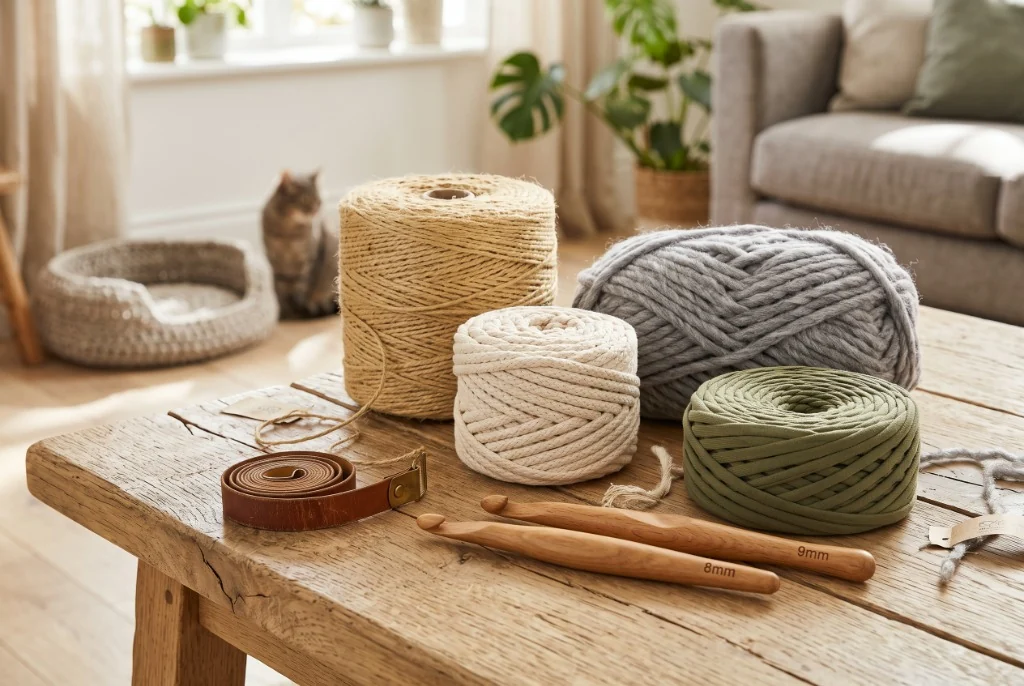
Choosing yarn for a handmade cat bed is completely different from picking skeins for a human throw or cozy sweater. Cats don’t merely sleep on their beds—they knead with sharp claws, rub their cheeks to deposit scent hormones, shed layers of fur, and test vertical sidewalls with their entire body weight. If you pick standard delicate craft acrylic or unspun roving, your hard work will unravel, pill, and collapse into a flattened rag within a fortnight. To save you time, yarn, and frustration, we evaluated dozens of fibers against rigorous claw puncture, sag resistance, and washing tests to bring you the 5 best yarns for crochet cat beds.
In This Fiber & Durability Guide:
- 1. Natural 3-Ply Jute Twine: The Scratch-Proof Heavyweight
- 2. Braided Cotton Cord & Tube Yarn: Modern, Washable Structure
- 3. 100% Dense Wool: The Scent-Attracting Thermal Champion
- 4. Upcycled T-Shirt Jersey Yarn: Snag-Resistant Heavy Nesting
- 5. Double-Stranded Mercerized Cotton: Crisp Summer Breathability
- Complete Yarn Durability & Claw Resistance Matrix
- 3 Red Flag Yarns You Should NEVER Use for Cats
- Feline Biology: Why Claws & Natural Scents Matter to Cats
1. Natural 3-Ply Jute Twine: The Scratch-Proof Heavyweight
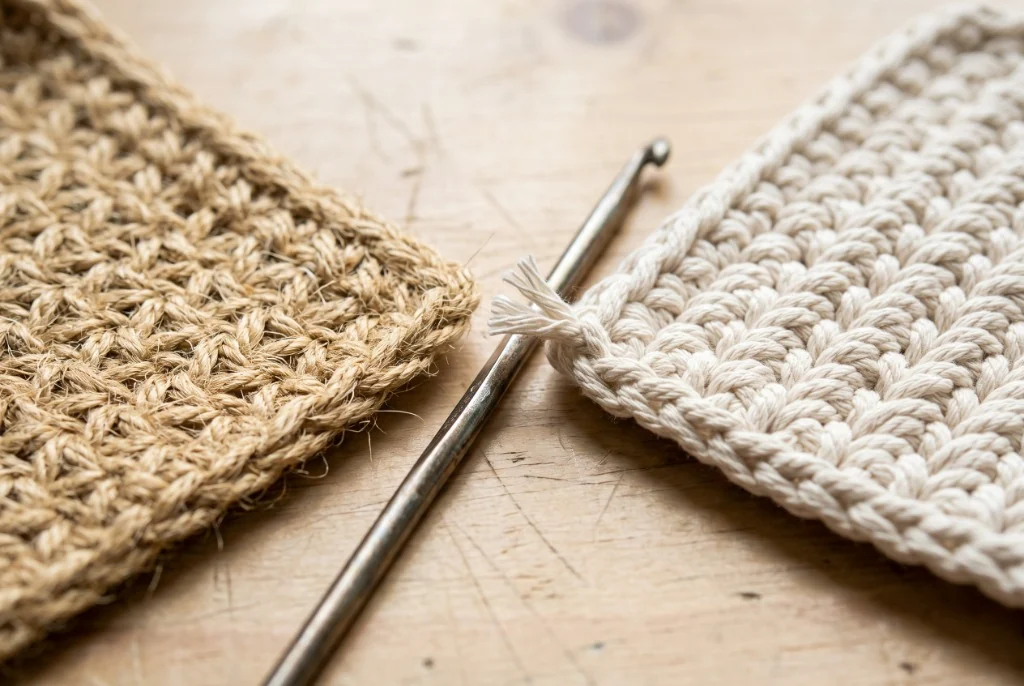
If your goal is building an upright, enclosed cat cave, dome, or igloo that never buckles, 3.5mm natural 3-ply jute twine is the undisputed champion. Jute is a rough, unyielding plant bast fiber harvested from the stems of the Corchorus plant—the exact material commercial manufacturers use to wrap heavy-duty cat scratching posts.
- Uncompromising Rigidity: Jute has near-zero tensile elasticity. Once crocheted into dense single or waistcoat stitches, it creates an architectural shell that easily supports a 15-pound cat leaning against the side walls.
- Built-In Scratching Relief: Cats possess a biological urge to groom their claws after waking up. Jute fibers safely catch claws without snagging, fraying, or pulling long loops.
- Best Used For: The outer structural dome, entrance ring reinforcement, and high-wear rim edges.
2. Braided Cotton Cord & Tube Yarn: Modern, Washable Structure
For makers who prefer a smooth, contemporary Scandinavian aesthetic without the scratchy rustic feel of plant twine, 3mm to 5mm braided cotton cord (often sold as macrame cord or cotton tube yarn with a polyester core) is phenomenal.
Unlike loosely twisted cotton yarn that splits on your hook, braided cord features a smooth tubular sheath. This closed construction means needle-sharp feline claws glide over the surface rather than piercing individual fiber plies.
- 100% Machine Washable: Cotton cords maintain their crisp structural integrity even after high-temperature washing cycles, making them ideal for households with long-haired or prone-to-hairballs cats.
- Zero Shedding: Absolutely no fiber lint or surface fuzz that your cat could inhale or swallow during self-grooming.
- Best Used For: Chunky low-profile donut nests, rimmed floor baskets, and multi-cat lounge beds.
3. 100% Dense Wool: The Scent-Attracting Thermal Champion
While jute and cotton cord excel at exterior architecture, cats will not sleep in a bed that doesn’t feel comfortable against their fur. For the interior sleeping surface, nothing rivals dense 100% wool (such as Peruvian Highland wool or bulky superwash wool).
Cats have a normal body temperature of 101.5°F (38.6°C) and actively seek warm microclimates to conserve metabolic energy. Wool is a cellular protein fiber packed with natural crimp, providing unmatched thermal regulation that traps body heat without causing overheating.

The Lanolin Magic: Why Cats Are Obsessed with Wool
Natural sheep’s wool contains trace amounts of lanolin—a natural wax that mimics the biochemical scent markers released by feline mothers during nursing. This is why cats naturally gravitate toward real wool beds and knead (“make biscuits”) into wool surfaces with deep relaxation. Lanolin is also naturally anti-microbial and repels dust mites and damp odors.
4. Upcycled T-Shirt Jersey Yarn: Snag-Resistant Heavy Nesting
Upcycled T-shirt yarn (Zpagetti style) is crafted from rolled strips of reclaimed cotton-jersey textile remnants. Because jersey fabric is knitted with fine interlocking loops rather than spun into loose plies, it offers surprising benefits for cat furniture:
- Puncture Resistance: When claws sink into a t-shirt yarn stitch, the stretchy cotton-elastane matrix expands and springs right back into place without snapping or creating fuzzy pulls.
- Significant Ballast Weight: A single bed crocheted with t-shirt yarn weighs between 2 to 3 pounds (1–1.5 kg). This heavy bottom ballast stops over-enthusiastic cats from skidding their bed across slick hardwood or tile floors when jumping inside.
- Best Used For: Low-profile nesting bowls, cat couch cushions, and quick weekend projects.

5. Double-Stranded Mercerized Cotton: Crisp Summer Breathability
If you live in a hot climate or want an ultra-crisp, easy-to-clean bed that won’t trap excessive body heat in midsummer, consider #4 worsted mercerized cotton held double.
The chemical mercerization process treats raw cotton with a mild alkaline bath under tension, which causes the cellulose fibers to swell, straightens out internal microscopic kinks, and singes away loose fuzz. The result is a smooth, lustrous cord with dramatic improvements in tensile strength and claw resistance.
- Zero Pilling: Claws cannot snag what isn’t fuzzy. Mercerized cotton stays clean and smooth year after year.
- Cooling & Breathable: Cotton actively wicks away moisture, creating a refreshing sleeping haven during warm summer heatwaves.
- Best Used For: Elevated cat hammocks, cave entrance trims, and lightweight travel pads.
Complete Yarn Durability & Claw Resistance Matrix
3 Red Flag Yarns You Should NEVER Use for Cats
While walking through craft store aisles, it can be tempting to reach for soft, fluffy novelty skeins. However, fiber standards from the Craft Yarn Council and veterinary safety experts urge makers to steer clear of these three dangerous yarn categories:
- Unspun Giant Roving (Chunky Merino or Acrylic Roving): While trendy in Instagram home decor photos, unspun roving has zero structural twist. Cat claws will shred it into loose clumps within 48 hours. Worse, loose roving fibers pose a severe intestinal blockage hazard if ingested during feline grooming.
- Chenille & Velvet Blanket Yarns: Chenille yarns are made by clipping short tufts onto a central core thread. Under sharp claw pressure, these tufts slip along the core—a common flaw called worming. Within a few kneading sessions, long loops pull loose and snag painfully around cat toes.
- Single-Strand Lightweight Acrylic: As we proved in our guide on How to Keep a Crochet Cat Bed Sturdy, standard acrylic relaxes permanently under 101.5°F cat body heat, transforming an upright dome into a saggy puddle. It also builds up static electricity that delivers unpleasant sparks to your cat’s wet nose!
Feline Biology: Why Claws & Natural Scents Matter to Cats
Understanding feline behavior helps explain why yarn selection is so critical to bed acceptance. Behavioral studies published by the Cornell Feline Health Center highlight that cats possess specialized interdigital scent glands between their toe pads.
When a cat kneads their paws against a bed, they are not simply softening their spot; they are depositing biological pheromones that mark the territory as safe. Natural fibers like plant bast jute and unmercerized wool absorb and hold these personal pheromones without giving off harsh synthetic petroleum smells. If a bed smells like comforting home territory, your cat will choose it over your laundry basket every single time.
Ready to Crochet the Ultimate Cat Bed?
Put these yarn lessons into action with our Free Cozy Jute Cat Bed Pattern! It combines a rigid 3.5mm jute outer cave with a removable, cloud-soft spiral wool mat. Or grab the 15-page collector’s PDF on Etsy with 5 multi-language editions for just $3.50.
We write tested crochet patterns for cats and dogs, and share everything we learn along the way. About us