Tutorials · crochet dog accessories
Granny Square Dog Sweaters: How to Turn Leftover Yarn into Cozy Pet Fashion
Transform your scrap yarn basket into stylish, cozy pet fashion! Learn how to crochet a granny square dog sweater, calculate square sizes for your dog's chest girth, layout and seam motifs, and add stretchy ribbed neckbands that never choke.
 The PetsYarn studio
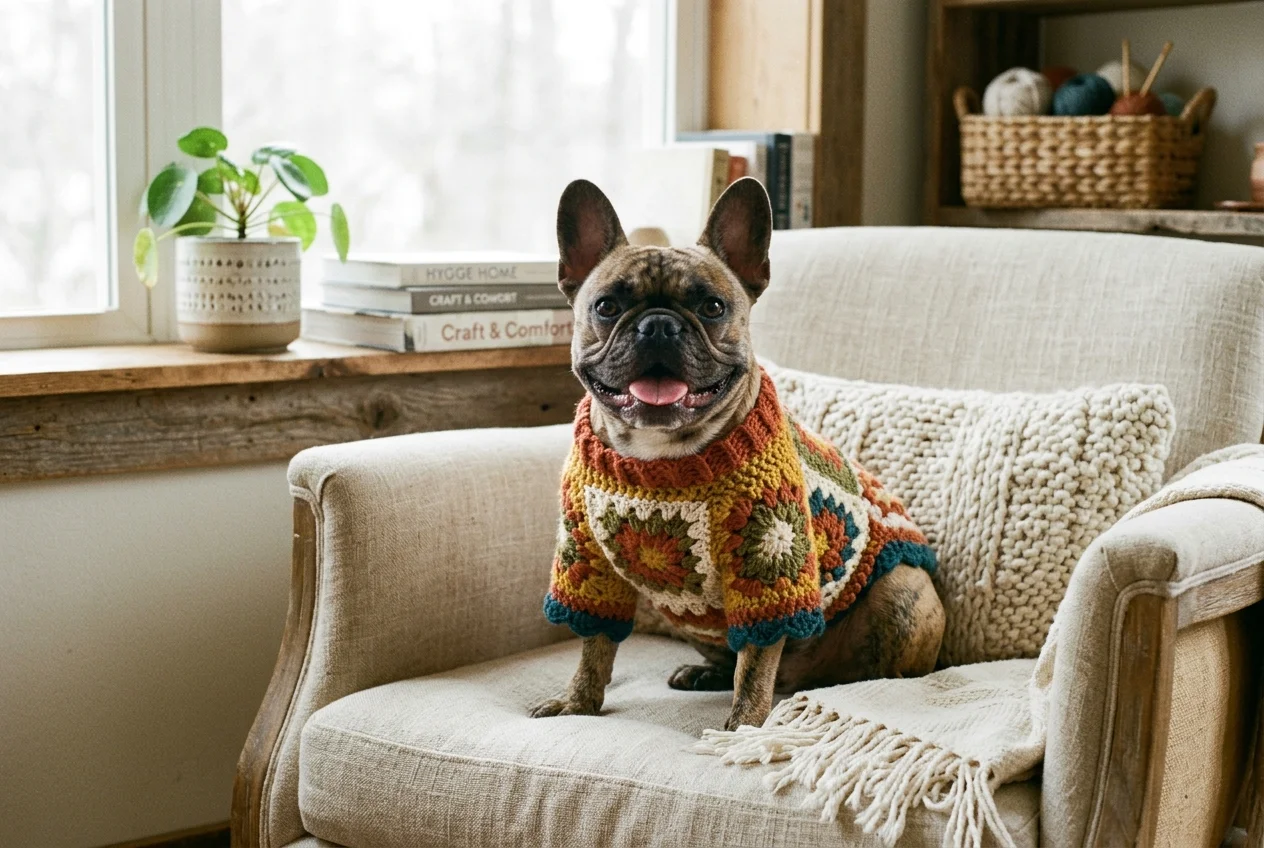
Every crocheter has that one overflowing basket of colorful scrap yarn: partial skeins too pretty to throw away, yet not enough yardage for a full human blanket. A crochet dog sweater granny square project is hands-down the most rewarding, creative way to give those leftovers new life.
According to textile design archives at the Victoria and Albert Museum, the traditional granny square originated as an ingenious thrift craft designed to make durable, warm fabrics from oddments of wool without wasting an inch of precious yarn. Today, that vintage charm has become a viral pet fashion trend.
Whether you want a full-body pullover or a matching crochet dog bandana granny square pattern, building canine apparel from modular squares makes sizing customizable: you can adjust width square-by-square and add custom borders for a tailored finish.
Step 1: Calculating square size from your dog’s measurements
Before hooking your first square, you need your dog’s chest girth. If you haven’t taken measurements yet, check our complete guide on how to measure your dog for crochet clothes.
The math is delightfully simple:
- A standard dog sweater body is built from a grid of 6 to 12 squares (typically 2 to 3 squares wide across the back, and 1 to 2 squares across the underbelly).
- Formula: Divide your dog’s total chest girth (plus 1 inch / 2.5 cm of positive ease) by the number of squares circling the torso.
- Example: A dog with an 18-inch (46 cm) chest wearing a 4-square circumference sweater needs each finished granny square to measure exactly 4.5 inches (11.5 cm) across.
Block your squares before joining! Steam or wet-block all squares to the exact same dimensions using a blocking board or pins on a foam tile. Flat, square edges make seaming ten times faster and prevent puckered seams.
Step 2: The sweater layout diagram
Arrange your finished squares on a flat work table before sewing a single stitch. Planning your color layout ensures dark and bright scrap colors balance pleasingly across your pet’s back.
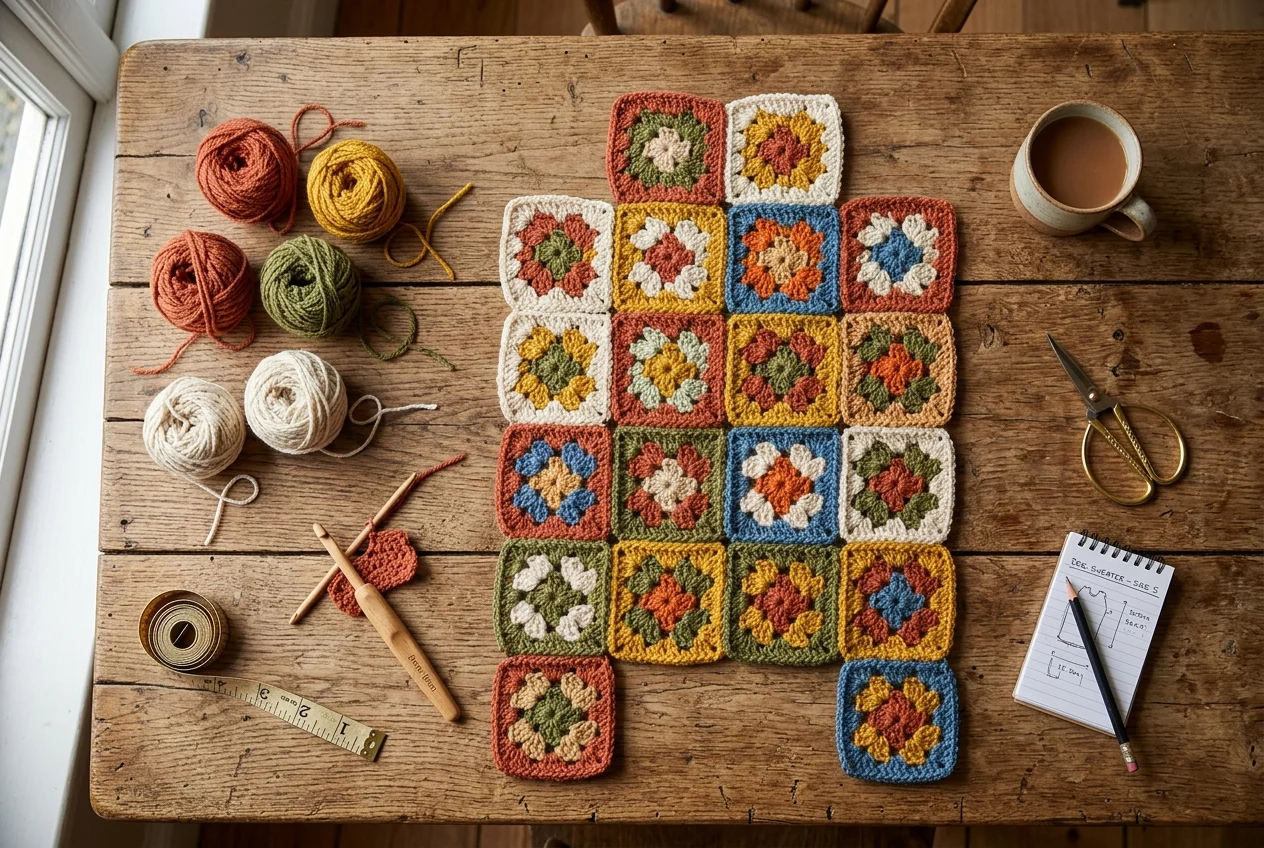
The standard 8-Square layout (Small to Medium dogs):
- Back Panel (4 squares): 2 rows of 2 squares covering the upper and lower back.
- Shoulders / Neck (2 squares): Folded at a 45-degree angle around the front of each shoulder.
- Chest & Underbelly (2 squares): Placed down the center of the ribcage between the front leg openings.
Step 3: Seaming squares together (Whip stitch vs. Slip stitch)
Because dogs run, roll, and stretch, sweater seams need to be both durable and flexible:
- Invisible Whip Stitch (Back Loops Only): Place two squares right sides facing, align corner chains, and whip-stitch through the back loops only using a blunt tapestry needle. This creates a flat, non-bulky seam that won’t rub against short pet fur.
- Flat Slip Stitch Join: With wrong sides together, slip stitch across the surface in a contrasting color for a modern decorative piped look.
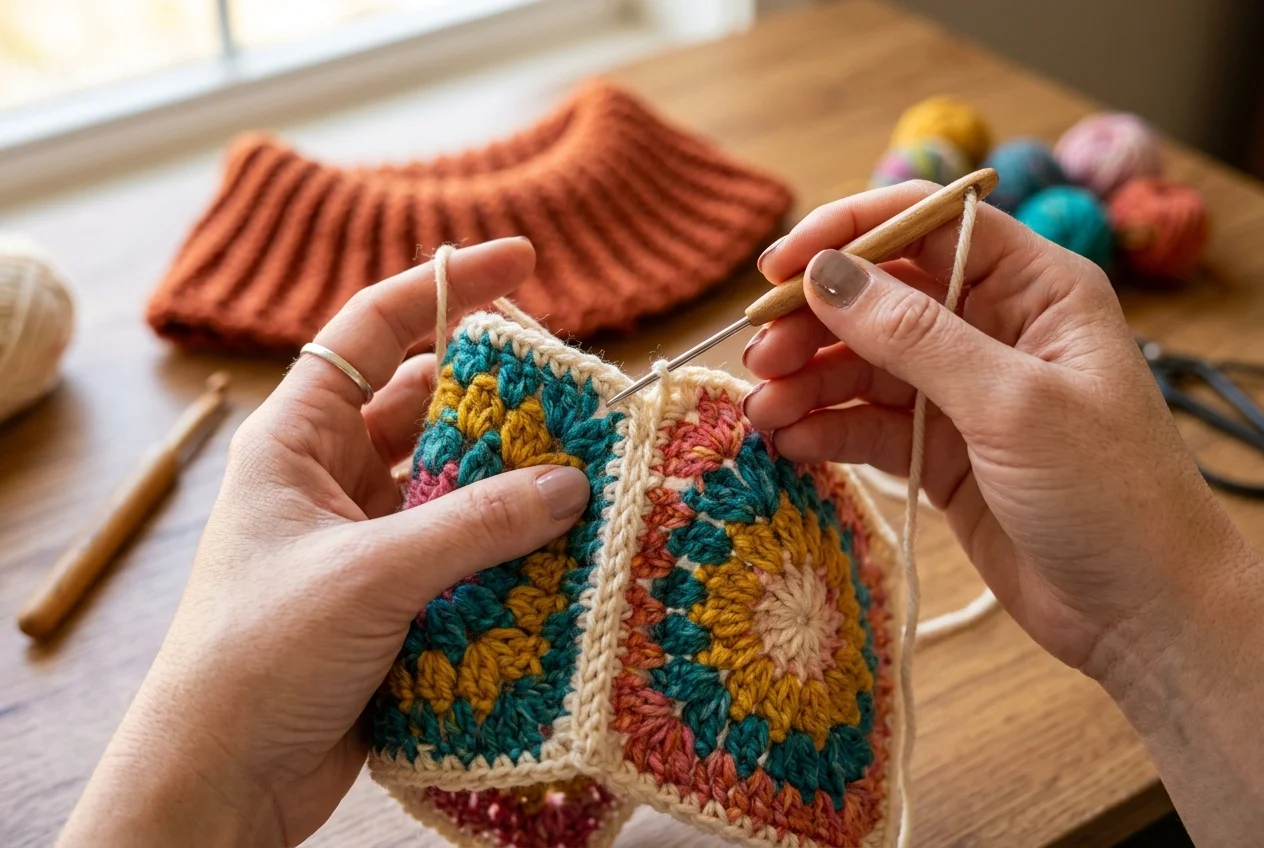
Step 4: Adding the stretchy ribbed neck and leg cuffs
Granny squares have zero natural elasticity. If you leave the neck opening raw, it will either choke your dog or slide off their shoulders. The secret is adding a ribbed collar:
- Join your yarn with a slip stitch at the center back of the neckline.
- Work 1 round of double crochet evenly around the raw square edges (decrease 2 to 4 stitches if the neck feels too wide).
- Work 3 to 5 rounds of alternating Front Post Double Crochet (FPDC) and Back Post Double Crochet (BPDC).
- Repeat around the armhole openings for snug, comfortable leg cuffs that prevent cold drafts.
Ready to start crafting?
Discover our full collection of tested dog clothing and pet accessories, complete with size charts and beginner-friendly instructions.
Frequently asked questions
Can I mix different yarn brands or fibers in one granny square sweater?
Yes, but stick to the same yarn weight (e.g. all DK or all worsted). Avoid mixing wool with non-pre-shrunk cotton in the same garment, as they shrink at different rates when washed and will distort the squares.
How do I make the sweater longer for a Dachshund or Corgi?
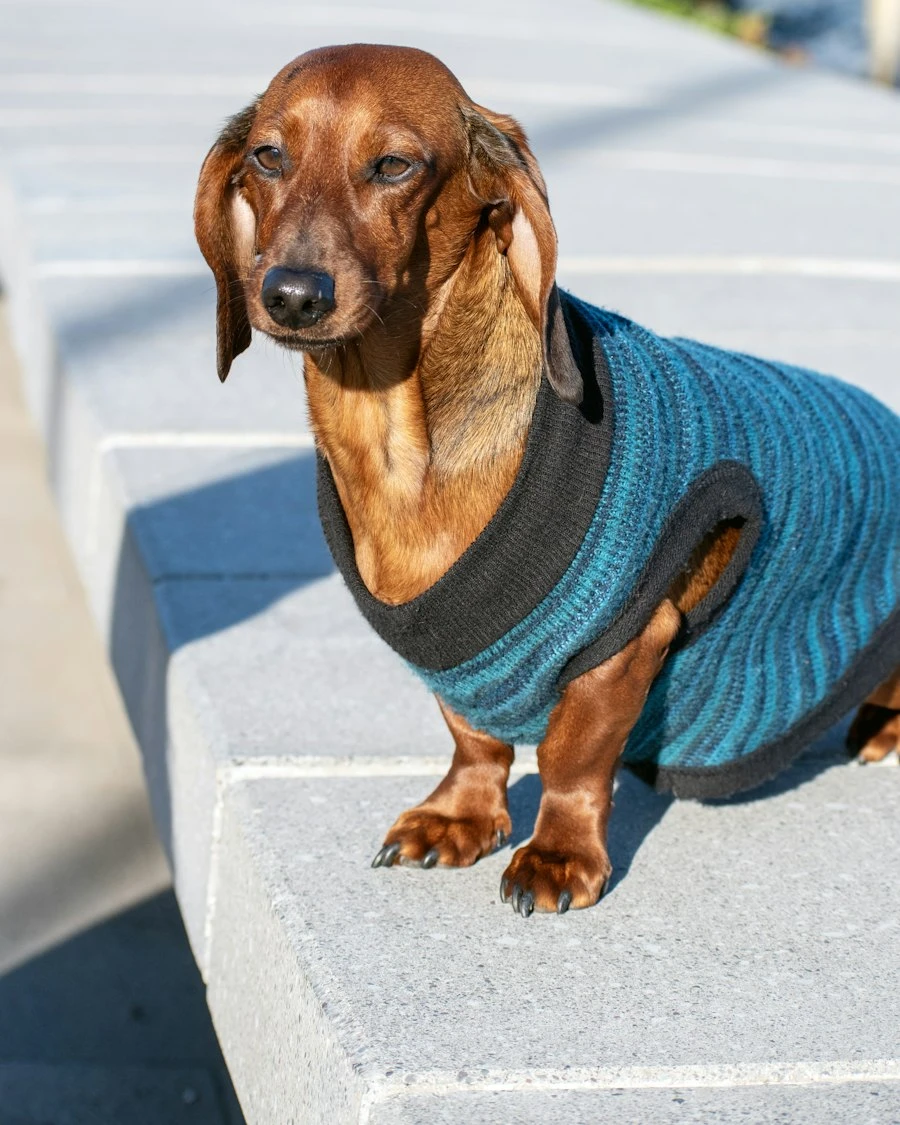
For long-bodied breeds, add an extra row of squares to the back panel only (making it 3 squares long), while keeping the underbelly panel short so male dogs don’t soil the hem.
What is the best way to weave in all those scrap yarn ends?
Crochet over your tails as you work each new round of color! This saves hours of sewing at the end. Always secure the final tail with a tiny hidden square knot inside the center ring.
We write tested crochet patterns for cats and dogs, and share everything we learn along the way. About us